SEX AND THE SUPREMACY OF CHRIST
by: Rev. John Stephen Piper, D.Theol.
Sex and the Supremacy of Christ, Part 1
2004 Desiring God National Conference
September 24, 2004
by: Rev. John Stephen Piper, D.Theol.
Sex and the Supremacy of Christ, Part 1
2004 Desiring God National Conference
September 24, 2004
There is a connection between the beheadings of Jack Hensley and Eugene Armstrong and Nick Berg and Paul Johnson and perhaps Kenneth Bigley, and this conference on Sex and the Supremacy of Christ.
I look at them and I see their hands and their eyes. And I think of my hands and my eyes and my death and my faith. And then I hear the words of Jesus put it all in perspective, and in relation to sex.
“You have heard that it was said, ‘You shall not commit adultery.’ 28 But I say to you that everyone who looks at a woman with lustful intent has already committed adultery with her in his heart. 29 If your right eye causes you to sin, tear it out and throw it away. For it is better that you lose one of your members than that your whole body be thrown into hell. 30 And if your right hand causes you to sin, cut it off and throw it away. For it is better that you lose one of your members than that your whole body go into hell.” (Matthew 5:27-30)
In other words, there is something far more important than to keep your eye or your hand—or your head—namely, to receive eternal life and not to perish in hell. And Jesus links it with the war that we are waging not in Iraq but in our hearts. And the issue is sexual desire and what we do with it.
Everywhere you look in the world, it seems, there are reminders that life is war. We are not playing games this weekend. Heaven and hell, Jesus says, are in the balance.
Two Simple, Weighty Points
I have two simple and weighty points to make. I think everything in this conference will be the explanation and application of these two points. The first is that sexuality is designed by God as a way to know God in Christ more fully. And the second is that knowing God in Christ more fully is designed as a way of guarding and guiding our sexuality. I use the phrase “God in Christ” to signal at the outset that I am going to move back and forth because the biblical assumption of this conference is that Christ is God.
Now to state the two points again, this time negatively, in the first place all misuses of our sexuality distort the true knowledge of Christ. And, in the second place, all misuses of our sexuality derive from not having the true knowledge of Christ.
Or to put it one more way: 1) all sexual corruption serves to conceal the true knowledge of Christ, but 2) the true knowledge of Christ serves to prevent sexual corruption.
1. Sexuality Is Designed by God as a Way to Know God More Fully
God created human beings in his image—male and female he created them, with capacities for intense sexual pleasure, and with a calling to commitment in marriage and continence in singleness.1 And his goal in creating human beings with personhood and passion was to make sure that there would be sexual language and sexual images that would point to the promises and the pleasures of God’s relationship to his people and our relationship to him. In other words, the ultimate reason (not the only one) why we are sexual is to make God more deeply knowable. The language and imagery of sexuality is the most graphic and most powerful that the Bible uses to describe the relationship between God and his people—both positively (when we are faithful) and negatively (when we are not).
Listen, for example, if you can without embarrassment, to both the positive and the negative in God’s words spoken through the prophet Ezekiel. Keep in mind that God has chosen Israel from all the peoples on the earth to experience his special covenant love, until the day when the Jewish Messiah, Jesus Christ, would come and live and die in the place of sinners, so that the gospel of Christ would overflow the banks of Israel and flood the nations of the world. So what we hear God say about his Love for his people Israel in the Old Testament is all the more true of his relationship to those who believe in his Son, the Messiah, Jesus Christ. Here is how God describes that relationship with Israel according to the prophet Ezekiel, chapter 16. He speaks to Jerusalem as the embodiment of his people and rehearses over a thousand years of history. Starting at verse 4:
On the day you were born your cord was not cut, nor were you washed with water to cleanse you, nor rubbed with salt, nor wrapped in swaddling cloths. 5 No eye pitied you, to do any of these things to you out of compassion for you, but you were cast out on the open field, for you were abhorred, on the day that you were born. 6 And when I passed by you and saw you wallowing in your blood, I said to you in your blood, “Live!” I said to you in your blood, “Live!” 7 I made you flourish like a plant of the field. And you grew up and became tall and arrived at full adornment. Your breasts were formed, and your hair had grown; yet you were naked and bare. 8 When I passed by you again and saw you, behold, you were at the age for love, and I spread the corner of my garment over you and covered your nakedness; I made my vow to you and entered into a covenant with you, declares the Lord God, and you became mine. 9 Then I bathed you with water and washed off your blood from you and anointed you with oil. 10 I clothed you also with embroidered cloth and shod you with fine leather. . . .
That’s a picture of God’s utterly free and undeserved mercy. That is how Israel was chosen. That’s how you were brought from death to life and from darkness to light and from unbelief to faith, if you are a believer. “I said to you, ‘Live!’ and made you flourish. I married you. You are mine.” That’s how Israel began. That’s how the Christian life begins. The Mighty mercy of God. Then he goes on with the image. Ezekiel 16:13 ff.:
Thus you were adorned with gold and silver, and your clothing was of fine linen and silk and embroidered cloth. You ate fine flour and honey and oil. You grew exceedingly beautiful and advanced to royalty. 14 And your renown went forth among the nations because of your beauty, for it was perfect through the splendor that I had bestowed on you, declares the Lord God. 15 But you trusted in your beauty and played the whore because of your renown and lavished your whoringson any passerby; your beauty became his. 16 You took some of your garments and made for yourself colorful shrines, and on them played the whore. The like has never been, nor ever shall be. . . . 32 Adulterous wife, who receives strangers instead of her husband! 33 Men give gifts to all prostitutes, but you gave your gifts to all your lovers, bribing them to come to you from every side with your whorings. . . .
There’s the picture of the faithless Israel. Her idolatry—her turning from the Lord God to foreign gods—is pictured as the work of a whore. And I say again what I said at the beginning: God created us with sexual passion so that there would be language to describe what it means to cleave to him in love and what it means to turn away from him to others. Now comes the word of judgment. Ezekiel 16:35 ff.:
35 Therefore, O prostitute, hear the word of the Lord: 36 Thus says the Lord God, Because your lust was poured out and your nakedness uncovered in your whorings with your lovers, and with all your abominable idols, and because of the blood of your children that you gave to them, 37 therefore, behold, I will gather all your lovers with whom you took pleasure, all those you loved and all those you hated. I will gather them against you from every side and will uncover your nakedness to them, that they may see all your nakedness. . . .
It may look as though God was finally finished with Israel. Judgment has fallen. The wife was put away. But that is not the last word. God hates divorce. Therefore, though he judge and separate, he will not finally forsake his covenant people—his wife. He will make with her a new covenant, and bring her back to himself at the cost of his Son and by the power of his Spirit. Ezekiel 16:59 ff.:
59 For thus says the Lord God: I will deal with you as you have done, you who have despised the oath in breaking the covenant, 60 yet I will remember my covenant with you in the days of your youth, and I will establish for you an everlasting covenant. . . . 62 I will establish my covenant with you, and you shall know that I am the Lord, 63 that you may remember and be confounded, and never open your mouth again because of your shame, when I atone for you for all that you have done, declares the Lord God.
The end of the story is that God, after giving up his faithless wife into the hands of her brutal lovers, will not only take her back, and not only make with her a new and everlasting covenant, but will himself pay for all her sins. Are there debts this prostitute owes? This husband will pay them. “When I atone for . . . all that you have done, declares the Lord.” Indeed he will pay with the life of is own Son.
And so in the New Testament, after Jesus Christ has died and risen and is gathering a people for himself and his heavenly Father, the apostle Paul calls all husbands to live with their wives like this (Ephesians 5:25-27). Model your love on this kind of love:
Husbands, love your wives, as Christ loved the church and gave himself up for her, 26 that he might sanctify her, having cleansed her by the washing of water with the word, 27 so that he might present the church to himself in splendor, without spot or wrinkle or any such thing, that she might be holy and without blemish.
This is the fulfillment of Ezekiel’s vision: “I will remember my covenant with you . . . and I will establish for you an everlasting covenant. . . . and you shall know that I am the Lord . . . when I atone . . . for all that you have done.” Jesus Christ creates and confirms and purchases with his blood the new covenant and the everlasting joy of our relationship with God. And the Bible calls it a marriage. And pictures the great day of our final union as “the marriage supper of the Lamb” (Revelation 19:9).
Therefore, I say again: God created us in his image, male and female, with personhood and sexual passions so that when he comes to us in this world there would be these powerful words and images to describe the promises and the pleasures of our covenant relationship with him through Christ.
God made us powerfully sexual so that he would be more deeply knowable. We were given the power to know each other sexually so that we might have some hint of what it will be like to know Christ supremely.
Therefore, all misuses of our sexuality (adultery, fornication, illicit fantasies, masturbation, pornography, homosexual behavior, rape, sexual child abuse, bestiality, exhibitionism, and so on) distort the true knowledge of God. God means for human sexual life to be a pointer and foretaste of our relationship with him.
2. Knowing God Is Designed by God as a Way of Guarding and Guiding Our Sexuality
That’s the first of my two points. Now the second is this: Not only do all the misuses of our sexuality serve to conceal or distort the true knowledge of God in Christ, but it also works powerfully the other way around: the true knowledge of God in Christ serves to prevent the misuses of our sexuality. So, on the one hand, sexuality is designed by God as a way to know Christ more fully. And, on the other hand, knowing Christ more fully is designed as a way of guarding and guiding our sexuality.
Now on the face of it this will seem to many as patently false—that knowing Christ will guard and guide our sexuality. Because many will list off the pastors, priests, and theologians who have committed adultery or who have been found addicted to pornography or who have sexually used little boys or girls. Surely, then, if pastors, who hold the sacred office of tenderly shepherding Christ’s flock, can be so sexually corrupt, there can be no correlation between knowing God and being sexually upright, can there?
I think this question should be answered from Scripture, not experience, because if the Scripture teaches that truly knowing God guards and guides and governs our sexuality in purity and love, then we may be sure that a pastor, or priest, or theologian, or anyone else, whose sexuality is not governed and guarded and guided in Christ-exalting purity and love does not know God—at least not as he ought. So what does the Bible teach concerning the knowledge of God and the guarding of our sexuality?
In answering this question let’s remember that knowing someone in the fullest biblical sense is defined by sexual imagery. Genesis 4:1, “Now Adam knew Eve his wife, and she conceived and bore Cain.” “Knowing” here refers to sexual intercourse. Or again in Matthew 1:24-25 we read, “When Joseph woke from sleep, he did as the angel of the Lord commanded him: he took his wife, 25 but knew her not until she had given birth to a son. And he called his name Jesus.” He “knew her not” means: he did not have sexual relations with her.
Now I don’t mean that every time the word “know” is used in the Bible there are sexual connotations. That’s not true. But what I do mean is that sexual language in the Bible for our covenant relationship to God does lead us to think of knowing God on the analogy of sexual intimacy and ecstasy. I don’t mean that we somehow have sexual relations with God or he with man. That’s a pagan thought. It’s not Christian. But I do mean that the intimacy and ecstasy of sexual relations points to what knowing God is meant to be.
One of the books of the Bible that makes this clear is the book of Hosea. Listen to the way God speaks through Hosea to describe the restoration of his marriage with faithless Israel. Hosea 2:14-20:
Behold, I will allure her, and bring her into the wilderness, and speak tenderly to her. 15 And there I will give her her vineyards and make the Valley of Achora door of hope. And there she shall answer as in the days of her youth, as at the time when she came out of the land of Egypt. 16 “And in that day, declares the Lord, you will call me ‘My Husband,’ and no longer will you call me ‘My Baal.’” 17 For I will remove the names of the Baals from her mouth, and they shall be remembered by name no more. . . . 19 And I will betroth you to me forever. I will betroth you to me in righteousness and in justice, in steadfast love and in mercy. 20 I will betroth you to me in faithfulness. And you shall know the Lord.
I think it is virtually impossible to read this and then honestly say that knowingGod, as God intends to be known by his people in the new covenant, simply means mental awareness or understanding or acquaintance with God. Not in a million years is that what “knowing God” means here. This is the knowing of a lover, not a scholar. A scholar can be a lover. But a scholar—or a pastor—doesn’t know God until he is a lover. You can know about God by research; but until the researcher is ravished by what he sees, he doesn’t know God for who he really is. And that is one great reason why many pastors can become so impure. They don’t know God—the true, massive, glorious, gracious, biblical God. The humble intimacy and brokenhearted ecstasy—giving fire to the facts—is not there.
But I am getting ahead of myself. I haven’t shown this from Scripture yet. I only said, “If the Scripture teaches that truly knowing God—truly knowing Christ—guards and guides and governs our sexuality in purity and love, then we may be sure that a pastor, or anyone else, whose sexuality is not governed and guarded and guided in purity and love does not know God—at least not as he ought.
So is this what the Bible teaches: that knowing God—knowing Christ—is the path to purity? Is it indeed the case that the true knowledge of God promised in Hosea (and Jeremiah 31:34) brings the powerful passions of the body under the sway of truth and purity and love?
I think this entire conference will be an answer to that question. But let me simply point you to some of the texts that provide the answer.2 Each of these texts teaches that knowing God revealed in Jesus Christ guards our sexuality from misuse, and that not knowing God leaves us prey to our passions. Romans 1:28:
Since they did not see fit to have God in [their] knowledge God gave them up to a debased mind to do what ought not to be done. (literal translation)
Suppressing the knowledge of God will make you a casualty of corruption. It is part of God’s judgment. If you trade the treasure of God’s glory for anything, you will pay the price for that idolatry in the disordering of your sexual life. That is what Romans 1:23-24 teaches:
They exchanged the glory of the immortal God for images resembling mortal man and birds and animals and reptiles. 24 Therefore God gave them up in the lusts of their hearts to impurity, to the dishonoring of their bodies among themselves,
This is the old way. When we come to Christ, we take it off like an old garment. Ignorance of God’s wrath and glory does not fit us any more. The new way is sexual holiness, and Paul contrasts it with not knowing God. 1 Thessalonians 4:3-5:
This is the will of God, your sanctification: that you abstain from sexual immorality; that each one of you know how to control his own body in holiness and honor, not in the passion of lust like the Gentiles who do not know God.
Not knowing God puts you at the mercy of your passions—and they have no mercy without God. Here’s the way Peter says it in 1 Peter 1:14-15:
As obedient children, do not be conformed to the passions of your former ignorance,but as he who called you is holy, you also be holy in all your conduct.
The desires that governed you in those days got their power from deceit, not knowledge. Ephesians 4:22:
Put off your old self, which belongs to your former manner of life and is corrupt through deceitful desires.
The desires of the body lie to us. They make deceitful promises—promises which are half true as in the garden of Eden. And we are powerless to expose and overcome unless we know God—really know God, his ways and works and words embraced with growing intimacy and ecstasy.
When Paul describes the new person in Christ, who is putting off the old practices and the old slaveries, he says in Colossians 3:10 that “the new self . . . is being renewed in knowledge after the image of its creator.” In other words, “I will betroth you to me forever, and you will know me.” And in this knowledge you will be renewed—including your sexuality.
Peter’s second letter has one of the clearest passages in the Bible on the relationship between knowing God and being liberated from corruption. In 2 Peter 1:3-4 he says,
His divine power has granted to us all things that pertain to life and godliness, through the knowledge of him who called us to his own glory and excellence, by which he has granted to us his precious and very great promises, so that through them you may become partakers of the divine nature, having escaped from the corruption that is in the world because of sinful desire.
The divine power that leads to godliness comes “through the knowledge of him who called us to his own glory and excellence.” And we become partakers of his divine nature—that is, we share in his righteous character—through his precious and very great promises. In other words, knowing the glorious treasure that God promises to be for us frees us from the corruption of lust and shapes us after the image of God.
Or as Jesus said, most simply in John 8:31-32:
If you abide in my word, you are truly my disciples, and you will know the truth, and the truth will set you free.
Not all truth. The truth that you find in my word. The truth that you find in relation to me as my disciple. And what is that truth? “I am the way, and the truth, and the life. No one comes to the Father except through me” (John 14:6). “No one knows the Father except the Son and anyone to whom the Son chooses to reveal him” (Matthew 11:27).
The Son knows the Father with infinite truth and intimacy and ecstasy. The joy that the Son has in the Father is unparalleled. His gladness in God the Father exceeds all gladness (Hebrews 1:9). And this he shares with us who trust him as Savior and Lord and Treasure of our lives. “These words I speak to you that my joy might be in you and you might be full” (John 15:11). “No one knows the Father except the Son and anyone to whom the Son chooses to reveal him.” And if he chooses, we will know the Father. And if we know the Father the way Christ knows the Father, we will be free.
Conclusion
Therefore I say again my two points that fly as a double banner over this conference: 1) sexuality is designed by Christ as a way to know God more fully. And 2) knowing Christ more fully in all his infinite supremacy is designed as a way of guarding and guiding our sexuality. All sexual corruption serves to conceal the true knowledge of Christ, and the true knowledge of Christ serves to prevent sexual corruption.
I will come back to this on Sunday morning in our final session, and all the speakers will unfold it. And as they do, let the double banner over this conference fly with the words of Hosea to the wayward wife of God and to you: “Let us know; let us press on to know the Lord; his going out is sure as the dawn; he will come to us as the showers, as the spring rains that water the earth.” Amen.
1 I would argue that when God wills singleness for any person he designs it as a way of knowing him more fully. There are unique ways of knowing God through sexual continence in singleness and unique ways of knowing God through sexual intimacy in marriage.
2 See other texts not referred to in this message: 2 Timothy 2:24-26; Romans 12:2; Philippians 1:9; Romans 10:3; Hosea 4:1, 6; 5:4; 6:3.
Source: http://www.desiringgod.org/ResourceLibrary/ConferenceMessages/ByTitle/1657_Sex_and_the_Supremacy_of_Christ_Part_1/
Sex and the Supremacy of Christ, Part 2
2004 Desiring God National Conference
September 26, 2004
On Friday night I waved a banner over this conference with two convictions written on it:
The first was that sexuality is designed by God as a way to know Christ more fully. And the second conviction from Friday night was that knowing Christ—the supremacy of Christ—more fully is designed by God as a way of guarding and guiding our sexuality. And when I speak of knowing Christ, I mean it in the fullest biblical sense of grasping great truth about Christ, and growing in fellowship with Christ, and being satisfied with the supremacy of Christ.
What I would like to do this morning, by God’s grace, is to help you experience that second conviction. I would like to help you know the supremacy of Christ more fully and show you a couple ways this will affect your sexuality.
My conviction is that the better you know the supremacy of Christ the more sacred and satisfying and Christ-exalting your sexuality will be. I have a picture in my mind of the majesty of Christ like the sun at the center of the solar system of your life. The massive sun, 333,000 times the mass of the earth, holds all the planets in orbit, even little Pluto, 3.6 billion miles away.
So it is with the supremacy of Christ in your life. All the planets of your life—your sexuality and desires, your commitments and beliefs, your aspirations and dreams, your attitudes and convictions, your habits and disciplines, your solitude and relationships, your labor and leisure, your thinking and feeling—all the planets of your life are held in orbit by the greatness and gravity and blazing brightness of the supremacy of Jesus Christ at the center of your life. And if he ceases to be the bright, blazing, satisfying beauty at the center of your life, the planets will fly into confusion, and a hundred things will be out of control, and sooner or later they will crash into destruction.
We were made to know Christ as he really is. (Which is why biblical doctrine is so important.) We were created to comprehend—as much as a creature can—the supremacy of Christ. And the knowing we were made to experience is not the knowing of disinterested awareness—like knowing that Caesar crossed the Rubicon, or ancient Gaul was divided into three parts—but the knowing of admiration and wonder and awe and intimacy and ecstasy and embrace. Not the knowing of Hurricane Jeanne by watching TV but by flying in the eye of the storm—sometimes even hang-gliding!
We were made to see and savor with everlasting satisfaction the supremacy of Christ. Our sexuality points to this, and our sexuality is purified by this. We are sexual beings that we may know something more of the supremacy of Christ. And we must know the supremacy of Christ—we must know him in his supremacy—in order to experience our sexuality as sacred and sweet and Christ-exalting—and secondary, quietly, powerfully secondary.
My prayer for this conference, and for all of you one by one, is that you will see and savor the supremacy of Christ—married or single, male or female, old or young, devastated by disordered desires or walking in a measure of holiness—that all of you will behold and embrace the supremacy of Christ as the blazing sun at the center of your life, and that the planet of your sexuality, with all its little moons of pleasure, will orbit in its proper place.
There are many practical strategies for being sexually pure in mind and body. I don’t demean them. I use them! But with all my heart I know, and with the authority of Scripture I know that the tiny space ships of our moral strategies will be useless in nudging the planet of sexuality into orbit, unless the sun of our solar system is the supremacy of Christ.
Oh, that the risen, living Christ, therefore, would come to us (even now) by his Spirit and through his Word and reveal to us
—the supremacy of his deity, equal with God the Father in all his attributes—the radiance of his glory and the exact imprint of his nature, infinite, boundless in all his excellencies;
—the supremacy of his eternality that makes the mind of man explode with the unsearchable thought that Christ never had a beginning, but simply always was; sheer, absolute reality while all the universe is fragile, contingent, like a shadow by comparison to his all-defining, ever-existing substance;
—the supremacy of his never-changing constancy in all his virtues and all his character and all his commitments—the same yesterday, today, and forever;
—the supremacy of his knowledge that makes the Library of Congress look like a matchbox, and all the information on the Internet look like a little 1940’s farmers almanac, and quantum physics—and everything Stephen Hawking ever dreamed—seem like a first-grade reader;
—the supremacy of his wisdom that has never been perplexed by any complication and can never be counseled the wisest of men;
—the supremacy of his authority over heaven and earth and hell, without whose permission no man and no demon can move one inch, who changes times and seasons, removes kings and sets up kings; does according to his will among the host of heaven and among the inhabitants of the earth; so none can stay his hand or say to him, “What have you done?”
—the supremacy of his providence without which not a single bird falls to the ground in the furthest reaches of the Amazon forest, or a single hair of any head turns black or white;
—the supremacy of his word that moment by moment upholds the universe and holds in being all the molecules and atoms and subatomic world we have never yet dreamed of;
—the supremacy of his power to walk on water, cleanse lepers and heal the lame, open the eyes of the blind, cause the deaf to hear and storms to cease and the dead to rise, with a single word, or even a thought;
—the supremacy of his purity never to sin, or to have one millisecond of a bad attitude or an evil, lustful thought;
—the supremacy of his trustworthiness never to break his word or let one promise fall to the ground;
—the supremacy of his justice to render in due time all moral accounts in the universe settled either on the cross or in hell;
—the supremacy of his patience to endure our dullness for decade after decade; and to hold back his final judgment on this land and on the world, that many might repent;
—the supremacy of his sovereign, servant obedience to keep his Father’s commandments perfectly and then embrace the excruciating pain of the cross willingly;
—the supremacy of his meekness and lowliness and tenderness that will not break a bruised reed or quench a smoldering wick;
—the supremacy of his wrath that will one day explode against this world with such fierceness that people will call out for the rocks and the mountains to crush them rather than face the wrath of the Lamb;
—the supremacy of his grace that gives life to spiritually dead rebels and wakens faith in hell-bound haters of God, and justifies the ungodly with his own righteousness;
—the supremacy of his love that willingly dies for us even while we were sinners and frees us for the ever-increasing joy in making much of him forever;
—the supremacy of his own inexhaustible gladness in the fellowship of the Trinity, the infinite power and energy that gave rise to all the universe and will one day be the inheritance of every struggling saint;
And if he would grant us to know him like this, it would be but the outskirts of his supremacy. Time would fail to speak of the supremacy of his severity, and invincibility, and dignity, and simplicity, and complexity, and resoluteness, and calmness, and depth, and courage. If there is anything admirable, if there is anything worthy of praise anywhere in the universe, it is summed up supremely in Jesus Christ.
He is supreme in every admirable way over everything:
over galaxies and endless reaches of space;
over the earth from the top of Mount Everest 29,000 feet up, to the bottom of the Pacific Ocean 36,000 feet down into the Mariana Trench;
He is supreme over all plants and animals, from the peaceful Blue Whale to the microscopic killer viruses;
over all weather and movements of the earth: hurricanes, tornadoes, monsoons, earthquakes, avalanches, floods, snow, rain, sleet;
over all chemical processes that heal and destroy: cancer, AIDS, malaria, flu, and all the workings of antibiotics and a thousand healing medicines.
He is supreme over all countries and all governments and all armies;
over Al Qaeda and all terrorists and kidnappings and suicide bombings and beheadings;
over bin Ladin and al-Zarqawi;
over all nuclear threats from Iran or Russia or North Korea.
He is supreme over all politics and elections;
over all media and news and entertainment and sports and leisure;
and over all education and universities and scholarship and science and research;
and over all business and finance and industry and manufacturing and transportation;
and over all the internet and information systems.
As Abraham Kuyper used to say, “there is not a square inch in the whole domain of our human existence over which Christ, who is Sovereign over all, does not cry, ‘Mine!’”[1] And rule with absolute supremacy. And though it may not seem so now, it is only a matter of time until he is revealed from heaven in flaming fire to give relief to those who trust him and righteous vengeance on those who don’t.
Oh, that the almighty God would help us see and savor the supremacy of his Son. Give yourself to this. Study this. Cultivate this passion. Eat and drink and sleep this quest to know the supremacy of Christ. Pray for God to show you these things in his Word. Swim in the Bible every day. Use the means of grace. Like God-centered, Christ-exalting books. Don’t go home without books to help you in this. Get John Owen on the glories of Christ[2] and the mortification of sin.[3] Get Mahaney on the Cross[4] and the glory of God in marriage.[5] Get Powlison[6] and Patterson[7] and Edwards.[8] And with all your getting—whatever it takes—get the all-satisfying supremacy of Christ at the center of your life.
This is the blazing sun at the center of your solar system, holding the planet of sexuality in sacred orbit. This is the ballast at the bottom of your little boat keeping it from being capsized by the waves of sexual temptation. This the foundation that holds up the building of your life so that you can build with strategies of sexual purity. Without this—without knowing and embracing the supremacy of Christ in all things—the planets fly apart, the waves overwhelm, and the building will one day fall.
The Main Obstacle to Knowing the Supremacy of Christ
So here we are as sinners. All of us. None is righteous, no, not one. We have all sinned and fallen short of the glory of God. We don’t know him, we don’t trust him and treasure him the way he deserves. So what stands in the way? What is our main obstacle to knowing the supremacy of Christ, with a deeply satisfying and sexuality-transforming knowledge?
The biblical answer to that question is: the absolutely just and holy wrath of God. We cannot know God in our sin because the wrath of God rests on us in our sin. What we deserve in our sin is not the knowledge of God, but the judgment of God. And since we are cut off from the knowledge of God by the wrath of God, we are cut off from sexual purity and holiness. God doesn’t owe us purity, he owes us punishment. Therefore we are hopelessly depraved and hopelessly condemned.
Except for one thing: the good news that Christ has become for us the curse to bear God’s wrath and the righteousness to meet God’s demand. This is the heart of the gospel. And without it, there is no hope to escape God’s wrath, no hope to know Christ’s supremacy, and there is no hope for sexual purity. But here it is for everyone who believes: Galatians 3:13, “Christ redeemed us from the curse of the law by becoming a curse for us—for it is written, ‘Cursed is everyone who is hanged on a tree.’” We were under the curse of God’s wrath. But Christ became a curse for us. And here it is again: Philippians 3:9, Paul’s testimony that he is “found in [Christ], not having a righteousness of my own that comes from the law, but that which comes through faith in Christ, the righteousness from God that depends on faith.” God’s demand was that we be perfect. We cannot, in our sin, fulfill this demand. But Christ has. And by faith in him that perfect righteousness is imputed to us.
Therefore, since it is true that Christ has absorbed all the wrath of God that was aimed at me, and since it is true that Christ has performed the perfect righteousness that God demands of me, there is now for me no condemnation. Instead every thought of God and every act of God toward me in Christ Jesus is mercy. The way is open to know him and all the beautiful supremacy of his Son. The cross of Christ has made the supremacy of Christ knowable.
The best gift of the gospel is not the forgiveness of sins. The best gift of the gospel is not the imputed righteousness of Christ. The best gift of the gospel is not eternal life. The best gift of the gospel is seeing and savoring the supremacy of Christ himself. The greatest reward of the cross is knowing the supremacy Christ.
How Then Does the Knowledge of the Supremacy of Christ (Opened to Us by the Gospel) Guide and Guard and Govern Our Sexual Lives?
How does it make our sexuality sacred, satisfying, and Christ-exalting? Of all the ways this works, I will only mention two.
First, knowing the supremacy of Christ enlarges the soul so that sex and its little thrills become as small as they really are.
Little souls make little lusts have great power. The soul, as it were, expands to encompass the magnitude of its treasure. The human soul was made to see and savor the supremacy of Christ. Nothing else is big enough to enlarge the soul as God intended and make little lusts lose their power.
Vast starry skies seen from a mountain in Utah, and four layers of moving clouds on a seemingly endless plain in Montana, and standing on the edge of a mile-deep drop in the Grand Canyon can all have a wonderfully supplementary role in enlarging the soul with beauty. But nothing can take the place of the supremacy of Christ. As Jonathan Edwards said, if you embrace all creation with goodwill, but not Christ, you are infinitely parochial. Our hearts were made to be enlarged by Christ, and all creation cannot replace his supremacy.
My conviction is that one of the main reasons the world and the church are awash in lust and pornography (by men and women—30% of internet pornography is now viewed by women) is that our lives are intellectually and emotionally disconnected from infinite, soul-staggering grandeur for which we were made. Inside and outside the church western culture is drowning in a sea of triviality, pettiness, banality, and silliness. Television is trivial. Radio is trivial. Conversation is trivial. Education is trivial. Christian books are trivial. Worship styles are trivial. It is inevitable that the human heart, which was made to be staggered with the supremacy of Christ, but instead is drowning in a sea of banal entertainment, will reach for the best natural buzz that life can give: sex.
Therefore, the deepest cure to our pitiful addictions is not any mental strategies—and I believe in them and have my own (see A N T H E M[9]). The deepest cure is to be intellectually and emotionally staggered by the infinite, everlasting, unchanging supremacy of Christ in all things. This is what it means to know him. Christ has purchased this gift for us at the cost of his life. Therefore, I say again with Hosea, let us know, let us press on to know the Lord.
Finally, the only other way I would mention that knowing Christ serves to save our sexuality from sin is that it empowers us to suffer.
Knowing all that God promises to be for us in Christ both now and for endless ages to come with ever-increasing joy, frees us from the compulsion that we must avoid pain and maximize comfort in this world. We need not, and we dare not. Christ died to make our everlasting future bright with the supremacy of his own glory. And the effect he means for it to have now is: glad-hearted suffering in the path of love.
Matthew 5:11-12, “Blessed are you when others revile you and persecute you and utter all kinds of evil against you falsely on my account. 12 Rejoice and be glad, for your reward is great in heaven.” Yes, namely, seeing and savoring the supremacy of Christ himself. That’s the reward, and that’s the power to suffer.
Luke 14:13-14, “When you give a feast, invite the poor, the crippled, the lame, the blind, 14 and you will be blessed, because they cannot repay you. You will be repaid at the resurrection of the just.” Yes, namely, seeing and savoring the supremacy of Christ himself. That will be your repayment, and that is the power to do the hard thing and serve the poor.
Hebrews 10:34, “You joyfully accepted the plundering of your property, since you knew that you yourselves had a better possession and an abiding one.” Yes, namely, seeing and savoring the supremacy of Christ himself. That is the better and abiding possession, and the power to be plundered with joy in the path of love.
Hebrews 13:13-14, “Therefore, let us go to him outside the camp and bear the reproach he endured. 14 For here we have no lasting city, but we seek the city that is to come.” Yes, the city where “glory of God gives it light, and its lamp is the Lamb” (Rev. 21:23), and we will live in the light of his supremacy forever. That is the better city, and that is the power to go outside the camp and bear reproach.
Therefore, knowing all that God promises to be for us in Christ is the power to suffer with joy. And here’s the link. We must suffer in order to be sexually pure.
When Jesus says in Matthew 5:28-29, “Everyone who looks at a woman with lustful intent has already committed adultery with her in his heart. If your right eye causes you to sin, tear it out and throw it away. For it is better that you lose one of your members than that your whole body be thrown into hell”—when Jesus says this, he means suffer whatever you must in order to win the war with lust.
Knowing the supremacy of Christ, being satisfied with all that God is for us in Jesus, gives us the power to suffer for the sake of loving people and being pure.
Therefore, in conclusion, I say again with Hosea: Let us know, let us press on to know the Lord. It will not be easy. It may cost you your life. But if you keep the supremacy of Christ before your eyes as an infinite prize, you will find the strength to suffer and press on to love and purity, with joy.
[1] Abraham Kuyper, Abraham Kuyper: A Centennial Reader, ed. James D. Bratt (Grand Rapids, Mich.: Eerdmans, 1998), 488.
[2] John Owen, The Glory of Christ, in The Works of John Owen, vol. 1, ed. W. H. Goold, 24 vols. (1850-1853; repr. Edinburgh: Banner of Truth, 1965).
[3] John Owen, The Mortification of Sin, in The Works of John Owen, vol. 6.
[4] C. J. Mahaney, The Cross Centered Life (Sisters, Ore.: Multnomah, 2003); C. J. Mahaney, Christ Our Mediator (Sisters, Ore.: Multnomah, 2004).
[5] C. J. Mahaney, Sex, Romance, and the Glory of God (Wheaton, Ill.: Crossway Books, 2004).
[6] David Powlison, Seeing with New Eyes: Counseling and the Human Condition Through the Lens of Scripture (Philipsburg, N.J.: P&R, 2003).
[7] Ben Patterson, Deepening Your Conversation With God: Learning to Love to Pray (Minneapolis: Bethany, 2001); Ben Patterson, Waiting: Finding Hope When God Seems Silent (Downers Grove, Ill.: InterVarsity Press, 1991).
[8] See the recommended resources in John Piper and Justin Taylor, eds., A God-Entranced Vision of All Things: Jonathan Edwards 300 Years Later (Wheaton, Ill.: Crossway Books, 2004).
[9] See John Piper, Pierced by the Word (Sisters, Ore.: Multnomah, 2003), 107-111. This is also available as a Fresh Words.
Source: http://www.desiringgod.org/ResourceLibrary/ConferenceMessages/ByTitle/184_Sex_and_the_Supremacy_of_Christ_Part_2/
© Desiring God
By John Piper. © Desiring God. Website: www.desiringGod.org
Biography of Rev. Dr. John S. Piper:
Rev. John Stephen Piper, D.Theol. was born in Chattanooga, Tennessee to Bill and Ruth Piper January 11, 1946. He is the Pastor for Preaching at Bethlehem Baptist Church in Minneapolis, Minnesota. He grew up in Greenville, South Carolina, and studied at Wheaton College, where he first sensed God's call to enter the ministry. He went on to earn degrees from Fuller Theological Seminary (Bachelor of Divinity–B.D.) and the University of Munich (D.Theol.). For six years he taught Biblical Studies at Bethel College in St. Paul, Minnesota, and in 1980 accepted the call to serve as pastor at Bethlehem. John is the author of more than 30 books and more than 25 years of his preaching and teaching is available free at desiringGod.org. John and his wife, Noel, have four sons, one daughter, and an increasing number of grandchildren.
Authored books:
· Love Your Enemies: Jesus' Love Command in the Synoptic Gospels and the Early Christian Paraenesis (Cambridge University Press, 1980; Baker, 1991).
· The Justification of God: An Exegetical and Theological Study of Romans 9:1-23 (Baker, 1983; 2nd edition 1993).
· Desiring God: Meditations of a Christian Hedonist (Multnomah, 1986; 2nd edition, 1996, 3rd edition, 2003).
· The Supremacy of God in Preaching (Baker, 1990, 2nd edition, 2003).
· The Pleasures of God (Multnomah, 1991; Expanded edition, 2000).
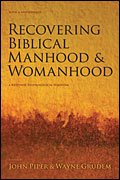
· Recovering Biblical Manhood and Womanhood (Co-editor) (Crossway, 1991).
· Let the Nations Be Glad! The Supremacy of God in Missions (Baker, 1993, 2nd Edition 2003).
· The Purifying Power of Living By Faith In Future Grace (Multnomah, 1995).
· A Hunger for God: Desiring God Through Fasting and Prayer (Crossway, 1997).
· A Godward Life: Savoring the Supremacy of God in All of Life (Multnomah, 1997).
· God’s Passion for His Glory: Living the Vision of Jonathan Edwards (Crossway, 1998).
· The Innkeeper (Crossway, 1998).
· A Godward Life, Book Two: Savoring the Supremacy of God in All of Life (Multnomah, 1999).
· The Legacy of Sovereign Joy (Crossway, 2000).
· The Hidden Smile of God (Crossway, 2001).
· Seeing and Savoring Jesus Christ (Crossway, 2001, 2nd edition, 2004).
· The Dangerous Duty of Delight (Multnomah, 2001).
· The Misery of Job and the Mercy of God (Crossway, 2002).
· Brothers, We Are not Professionals: A Plea to Pastors for Radical Ministry (Broadman & Holman Publishers, 2002).
· The Roots of Endurance: Invincible Perseverance in the Lives of John Newton, Charles Simeon, and William Wilberforce (Crossway, 2002).
Counted Righteous in Christ: Should We Abandon the Imputation of Christ's Righteousness? (Crossway, 2002).
Beyond the Bounds (Co-editor) (Crossway, 2003).
Don’t Waste Your Life (Crossway, 2003).
Pierced By the Word (Multnomah, 2003).
The Prodigal’s Sister (Crossway, 2003).
The Passion of Jesus Christ (Crossway, 2004).
When I Don’t Desire God: How to Fight for Joy (Crossway, 2004).
Life As a Vapor (Multnomah, 2004).
Taste and See (Multnomah, 2005).
God is the Gospel: Meditations on God's Love as the Gift of Himself (Crossway, 2005).
Sex and the Supremacy of Christ (w/ Justin Taylor, Crossway, 2005).
Source:
http://en.wikipedia.org/wiki/John_Piper_(theologian)
and http://www.desiringgod.org/AboutUs/JohnPiper/
Note:
Rev. Dr. John S. Piper’s book which is related to this passage, i.e. Sex and Supremacy of Christ will be translated into Indonesian and published by Momentum Christian Literature, Surabaya (www.momentum.or.id) in this year (2008).
Note:
Rev. Dr. John S. Piper’s book which is related to this passage, i.e. Sex and Supremacy of Christ will be translated into Indonesian and published by Momentum Christian Literature, Surabaya (www.momentum.or.id) in this year (2008).